
 Admin
Admin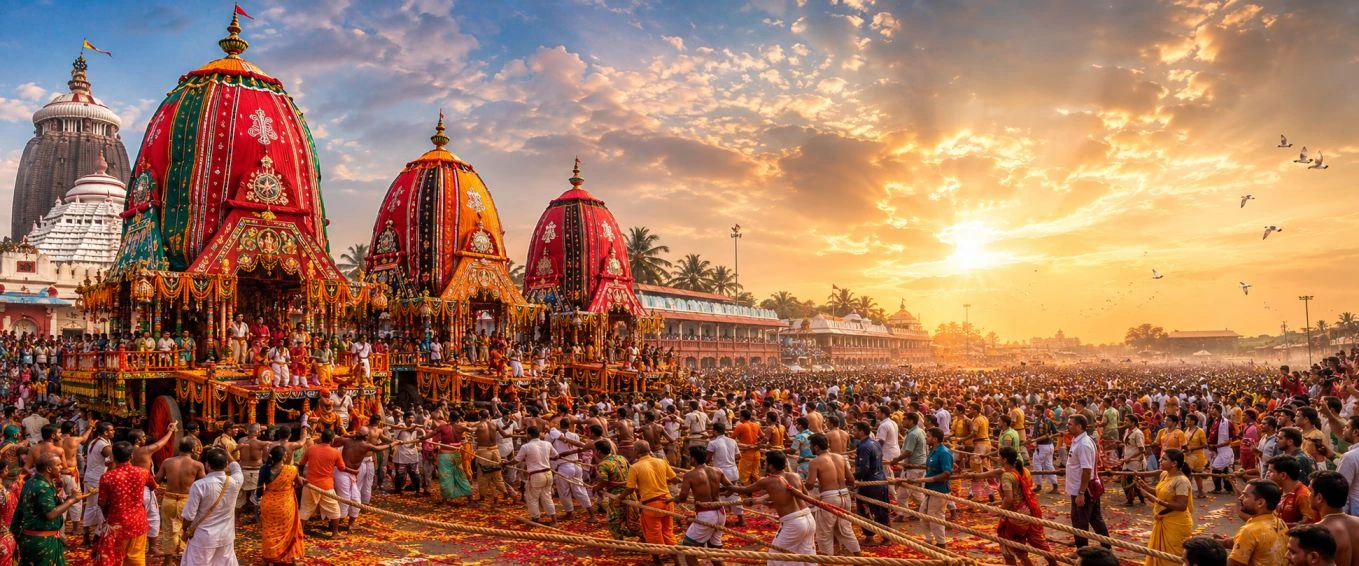
The Jagannath Rath Yatra 2026 is one of India's largest and most respected religious festivals, bringing millions of devotees to the holy city of Puri in Odisha. Every year, Lord Jagannath, Lord Balabhadra, and Devi Subhadra leave the Jagannath Temple in beautifully decorated wooden chariots and travel to the Gundicha Temple, where they stay for several days before returning in the Bahuda Yatra.
In 2026, the Rath Yatra begins on 16 July 2026, while the Bahuda Yatra, the return journey of the deities, takes place on 24 July 2026. Devotees from across India and around the world gather to witness this spiritual celebration, pull the sacred chariots, and seek blessings during this once-a-year event.
Whether you are planning your first visit to Puri or returning to experience the festival again, this guide covers everything you need to know about Jagannath Rath Yatra 2026, including important dates, rituals, travel information, and useful tips for a comfortable pilgrimage.
Introduction Jagannath Rath Yatra
Every year, the holy city of Puri in Odisha becomes the center of devotion as millions of pilgrims gather to celebrate the Jagannath Rath Yatra. Recognized as one of the oldest and largest chariot festivals in the world, this grand celebration is dedicated to Lord Jagannath, Lord Balabhadra, and Devi Subhadra. The festival is not only a major religious event but also an important cultural tradition that reflects India's rich spiritual heritage.
The Jagannath Rath Yatra 2026 will begin on 16 July 2026 (Ashadha Shukla Dwitiya) with the ceremonial procession of the three deities from the Jagannath Temple to the Gundicha Temple. Thousands of devotees pull the magnificent wooden chariots through the streets of Puri, believing that participating in this sacred journey brings blessings, peace, and spiritual fulfillment.
The festival continues for nine days, during which the deities stay at the Gundicha Temple before returning to the Jagannath Temple on 24 July 2026 during the Bahuda Yatra. Every stage of the festival, from the construction of the chariots to the return journey, follows centuries-old traditions that have been preserved with great devotion.
People from every corner of India and many other countries visit Puri to witness this extraordinary event. Families, pilgrims, photographers, researchers, and tourists come together to experience the vibrant atmosphere, devotional music, traditional rituals, and the spiritual energy that fills the city throughout the festival.
Since millions of visitors arrive during Rath Yatra, planning your trip in advance is highly recommended. Booking accommodation early, understanding the festival schedule, and arranging local transportation can make your journey much more comfortable. If you are travelling from nearby cities, airports, or railway stations, a pre-booked cab can help you avoid last-minute delays and reach your destination with ease.
In this complete guide, you'll find everything you need to know about Jagannath Rath Yatra 2026, including the festival dates, history, significance, daily schedule, chariot details, important rituals, travel tips, nearby attractions, and practical information to help you plan a memorable pilgrimage to Puri.
Jagannath Rath Yatra 2026: Important Dates
The Jagannath Rath Yatra follows the Hindu lunar calendar and is celebrated every year during the month of Ashadha. In 2026, the festival begins in mid-July and continues for nine days, attracting millions of devotees from across India and abroad.
Jagannath Rath Yatra 2026 Schedule
|
Event |
Date |
|
Snana Purnima |
30 June 2026 |
|
Anavasara Period Begins |
1 July 2026 |
|
Netrotsava |
15 July 2026 |
|
Jagannath Rath Yatra |
16 July 2026 |
|
Stay at Gundicha Temple |
16–23 July 2026 |
|
Bahuda Yatra (Return Journey) |
24 July 2026 |
|
Suna Besha |
25 July 2026 |
|
Niladri Bije |
27 July 2026 |
During these nine days, the Holy Trinity stays at the Gundicha Temple before returning to the Jagannath Temple in a grand procession. Each ceremony has its own religious significance and is witnessed by lakhs of devotees.
Jagannath Rath Yatra 2026 Highlights
- Festival Begins: 16 July 2026
- Festival Duration: 9 Days
- Return Journey (Bahuda Yatra): 24 July 2026
- Location: Puri, Odisha
- Main Deities: Lord Jagannath, Lord Balabhadra and Devi Subhadra
- Destination: Gundicha Temple
- Festival Type: Hindu Religious Festival
- Estimated Visitors: Millions of devotees from India and around the world
This section naturally incorporates high-value keywords such as Jagannath Rath Yatra 2026, Rath Yatra 2026 Date, Bahuda Yatra 2026, Puri Rath Yatra, and Gundicha Temple, while remaining easy to read and useful for visitors.
History and Significance of Jagannath Rath Yatra
The Jagannath Rath Yatra is one of the oldest and most celebrated Hindu festivals, with a history that spans centuries. Held every year in Puri, Odisha, the festival represents devotion, equality, and the belief that the divine reaches out to every devotee. Unlike many temple rituals where only worshippers visit the deity, Rath Yatra is unique because Lord Jagannath, Lord Balabhadra, and Devi Subhadra come out of the temple to bless everyone, regardless of caste, community, or background.
The origin of the festival is closely associated with ancient Hindu traditions and is mentioned in several sacred texts, including the Skanda Purana, Brahma Purana, and Padma Purana. According to tradition, the deities travel from the Jagannath Temple to the Gundicha Temple, which is believed to be the home of their aunt, Goddess Gundicha. This symbolic journey reflects love, compassion, and the divine connection between God and devotees.
Every year, new wooden chariots are handcrafted using traditional techniques passed down through generations. Skilled artisans begin the construction months before the festival, following strict religious customs. The chariots are not reused, making each Rath Yatra unique and spiritually significant.
One of the most inspiring moments of the festival is when thousands of devotees pull the massive chariots using thick ropes. Participating in this sacred act is considered a blessing, and many believe it brings peace, prosperity, and spiritual growth. The atmosphere is filled with devotional songs, chanting, traditional music, and an overwhelming sense of faith as the streets of Puri come alive with millions of pilgrims.
Over the years, the Jagannath Rath Yatra has grown into an international celebration. Similar processions are now organized in many cities across India and around the world, allowing devotees everywhere to celebrate this sacred tradition while preserving its cultural and spiritual values.
Why is Jagannath Rath Yatra Celebrated?
The festival celebrates the annual journey of the Holy Trinity from the Jagannath Temple to the Gundicha Temple. This journey symbolizes the Lord stepping out of the temple to meet all devotees, reminding everyone that divine blessings are available to all without discrimination.
For devotees, Rath Yatra is much more than a religious procession. It is a celebration of faith, humility, service, and togetherness. The sight of the magnificent chariots moving through the streets of Puri inspires millions and strengthens the spiritual bond between the devotees and the deities.
Many pilgrims consider witnessing the Rath Yatra or participating in pulling the chariots to be one of the most sacred experiences of their lives. Families often travel together to seek blessings, offer prayers, and take part in the festive atmosphere that fills the city during these nine days.
The Three Sacred Chariots of Jagannath Rath Yatra 2026
One of the most remarkable attractions of the festival is the three beautifully decorated wooden chariots, each specially built for one of the deities.
|
Deity |
Chariot Name |
Height |
Wheel Count |
|
Lord Jagannath |
Nandighosha |
Approximately 45 feet |
16 Wheels |
|
Lord Balabhadra |
Taladhwaja |
Approximately 44 feet |
14 Wheels |
|
Devi Subhadra |
Darpadalana (Devadalana) |
Approximately 43 feet |
12 Wheels |
Each chariot is constructed using sacred wood, decorated with colorful fabrics, traditional artwork, and religious symbols. Thousands of devotees gather to pull these magnificent chariots through the Grand Road (Bada Danda) from the Jagannath Temple to the Gundicha Temple.
Watching the three chariots move together is one of the most unforgettable moments of the entire festival and attracts pilgrims, photographers, and visitors from across the world.
Complete Rituals of Jagannath Rath Yatra 2026
The Jagannath Rath Yatra is much more than a grand chariot procession. It is a series of sacred rituals that begin weeks before the main festival and continue even after the return journey. Each ceremony has its own religious importance and reflects centuries-old traditions that are still followed with great devotion in Puri.
Understanding these rituals helps devotees appreciate the spiritual significance of the festival and the customs that make Jagannath Rath Yatra one of the most respected celebrations in India.
Snana Purnima – The Sacred Bathing Ceremony
The festival preparations begin with Snana Purnima, during which Lord Jagannath, Lord Balabhadra, and Devi Subhadra are ceremonially bathed with 108 pots of sacred water. This ritual symbolizes purification and marks the beginning of the Rath Yatra celebrations.
According to tradition, after this grand bathing ceremony, the deities are believed to become unwell due to the extensive bathing.
Anavasara – The Period of Rest
Following Snana Purnima, the deities remain away from public view during a period known as Anavasara. For approximately two weeks, devotees are not allowed to have their regular darshan.
During this time, temple priests perform special rituals while the deities are believed to recover. This period also increases the anticipation among devotees eagerly waiting for the Rath Yatra.
Netrotsava – The Ceremony of Divine Vision
Before the Rath Yatra begins, the deities reappear during Netrotsava, also known as Nava Jaubana Darshan. Their eyes are ceremonially repainted, symbolizing renewed life and energy after the period of rest.
Thousands of devotees gather to witness this special darshan before the Holy Trinity embarks on the annual journey.
Chhera Pahanra – The King's Humble Service
One of the most unique traditions of the festival is Chhera Pahanra.
The Gajapati Maharaja of Puri, regarded as the foremost servant of Lord Jagannath, sweeps the platforms of all three chariots with a golden broom while sprinkling sandalwood water and fragrant flowers.
This beautiful ritual symbolizes humility and reminds everyone that no one is greater than the Almighty.
The Grand Rath Yatra
On 16 July 2026, the massive wooden chariots carrying Lord Jagannath, Lord Balabhadra, and Devi Subhadra begin their journey from the Jagannath Temple to the Gundicha Temple.
Millions of devotees gather along the Grand Road (Bada Danda) to pull the sacred chariots using thick ropes. The atmosphere is filled with devotional chants, traditional music, and overwhelming spiritual energy.
For many pilgrims, participating in pulling the chariots is considered a once-in-a-lifetime blessing.
Stay at Gundicha Temple
After reaching the Gundicha Temple, the deities remain there for about nine days.
During this period, thousands of devotees visit the temple to seek blessings and participate in daily rituals. The peaceful surroundings and devotional atmosphere make this one of the most spiritually significant phases of the festival.
Bahuda Yatra – The Return Journey
On 24 July 2026, the Holy Trinity begins the Bahuda Yatra, returning from the Gundicha Temple to the Jagannath Temple.
Just like the main Rath Yatra, lakhs of devotees line the streets of Puri to witness the return procession. The journey is accompanied by devotional singing, traditional instruments, and an atmosphere of celebration.
Suna Besha – The Golden Attire
After returning to the Jagannath Temple, the deities are adorned with magnificent gold ornaments during the Suna Besha ceremony.
This is one of the most visually spectacular rituals of the festival, where devotees witness Lord Jagannath, Lord Balabhadra, and Devi Subhadra decorated with golden crowns, hands, weapons, and ornaments.
Thousands of pilgrims gather specifically to witness this breathtaking ceremony.
Niladri Bije – The Grand Conclusion
The festival concludes with Niladri Bije, when the deities finally re-enter the Jagannath Temple.
This ceremony marks the successful completion of the annual Rath Yatra and symbolizes the return of the Lord to His divine abode after blessing devotees during the sacred journey.
With Niladri Bije, the nine-day festival comes to an end, leaving devotees with memories of faith, devotion, and spiritual joy until the next year's Rath Yatra.
Why You Should Visit Jagannath Rath Yatra at Least Once
Witnessing the Jagannath Rath Yatra is a unique spiritual experience that combines devotion, culture, tradition, and community participation. From the towering wooden chariots and centuries-old rituals to the vibrant streets of Puri filled with chants and celebrations, every moment reflects the rich heritage of India.
Whether you visit for religious reasons, cultural exploration, photography, or simply to experience one of the world's largest chariot festivals, the Rath Yatra offers unforgettable memories and a deeper understanding of India's spiritual traditions.
How to Reach Puri for Jagannath Rath Yatra 2026
Planning your journey in advance is essential if you are attending the Jagannath Rath Yatra 2026. During the festival, millions of devotees visit Puri, resulting in heavy traffic, crowded railway stations, and high demand for accommodation. Choosing the right mode of transport and booking early can make your pilgrimage more comfortable and stress-free.
Puri is well connected by air, rail, and road, making it accessible from major cities across India.
Reach Puri by Air
The nearest airport to Puri is Biju Patnaik International Airport (BBI) in Bhubaneswar, located approximately 60 km away.
The airport has regular flights from major Indian cities, including:
- Delhi
- Mumbai
- Bengaluru
- Hyderabad
- Chennai
- Kolkata
- Ahmedabad
- Lucknow
After arriving at Bhubaneswar Airport, you can travel to Puri by taxi, cab, or bus. The journey usually takes 1.5 to 2 hours, depending on traffic conditions.
Reach Puri by Train
Puri Railway Station is one of the busiest railway stations in Odisha during the Rath Yatra season.
Several direct trains connect Puri with cities such as:
- New Delhi
- Kolkata
- Mumbai
- Chennai
- Ahmedabad
- Patna
- Varanasi
- Prayagraj
- Lucknow
- Bhubaneswar
It is advisable to reserve train tickets well in advance, as seats fill up quickly during the festival.
Reach Puri by Road
Puri has an excellent road network and can be reached by private vehicles, taxis, and state transport buses.
Popular road routes include:
- Bhubaneswar to Puri
- Cuttack to Puri
- Konark to Puri
- Chilika Lake to Puri
- Visakhapatnam to Puri
- Kolkata to Puri
Travelling by road offers flexibility, especially if you wish to visit nearby temples and tourist attractions along the way.
Best Time to Arrive for Jagannath Rath Yatra 2026
If you plan to witness the main chariot procession, consider reaching Puri at least one or two days before 16 July 2026. Arriving early gives you enough time to settle into your accommodation, explore the city, and avoid last-minute travel delays.
Many devotees also stay until 24 July 2026 to witness the Bahuda Yatra, the return journey of Lord Jagannath, Lord Balabhadra, and Devi Subhadra.
Where to Stay During Rath Yatra
Puri offers accommodation options for every budget, including:
- Hotels
- Beach Resorts
- Guest Houses
- Dharamshalas
- Temple Lodges
- Budget Stays
- Luxury Hotels
Since the festival attracts millions of visitors, booking your stay several weeks or months in advance is highly recommended.
Choose accommodation close to the Jagannath Temple or along the main procession route if you want easier access to the festival.
Travel Tips for Jagannath Rath Yatra 2026
If you are visiting Puri for the first time, a little preparation can make your journey much smoother.
- Book your hotel and transportation well in advance.
- Carry a valid ID proof and keep digital copies of important documents.
- Wear light, comfortable clothing suitable for July weather.
- Stay hydrated and carry drinking water.
- Follow local administration and police guidelines during the procession.
- Wear comfortable walking shoes, as you may need to walk long distances.
- Keep your mobile phone fully charged and carry a power bank.
- Travel with family members or companions whenever possible.
- Respect temple customs and local traditions.
- Keep sufficient time for traffic diversions and security checks.
Explore Nearby Attractions in Puri
Your trip to Puri can be even more memorable by visiting some of the nearby attractions after attending the Rath Yatra.
Konark Sun Temple
A UNESCO World Heritage Site known for its remarkable stone architecture and historical significance.
Puri Beach
A popular destination where visitors enjoy sunrise views, local food, and the peaceful atmosphere of the Bay of Bengal.
Chilika Lake
Asia's largest brackish water lagoon, famous for migratory birds, scenic boat rides, and the chance to spot Irrawaddy dolphins.
Sakshi Gopal Temple
An important pilgrimage site located on the route between Bhubaneswar and Puri.
Raghurajpur Heritage Village
A traditional artisan village renowned for Pattachitra paintings, handicrafts, and Odisha's cultural heritage.
Travel Comfortably with GarudGo During Jagannath Rath Yatra 2026
During the Rath Yatra, transportation demand increases significantly. Booking your travel in advance helps you avoid last-minute inconvenience and ensures a smoother journey.
GarudGo offers reliable cab services for airport transfers, railway station pickups, local sightseeing, and outstation travel. Whether you are travelling alone, with family, or in a group, you can choose from a range of well-maintained vehicles, including Sedan, SUV, Innova Crysta, and Tempo Traveller options.
With professional drivers, transparent pricing, and flexible booking options, GarudGo aims to make your pilgrimage to Puri comfortable from the beginning of your journey until you return home.